This site is not a shop. Prowse & Hargood ceased trading and the company behind it was dissolved. This collection covers the house's shirts, cloth and craft. Nothing here is for sale, no order can be placed, and no prices, ordering routes or contact details are provided. More about Prowse & Hargood.
Women's Shirts
The women's range came later than the men's. For the first year or so of trading, customers could join a waiting list for an upcoming women's range. By 2005, the range had shipped alongside the men's collection.
Why it came second
Prowse & Hargood started as a men's shirtmaker and its whole production specification was written around men's shirting: two-fold long-staple cotton, collar sizes in half-inch steps from 15 to 18, sleeve lengths paired to collars. A women's range could not simply reuse that. It needed its own block — different shoulder slope, bust shaping through darts, a different relationship between collar and neckline — while using the same cloth, because the cloth was the house's whole argument.
The introduction was handled carefully. Rather than announce a date, the house collected registrations for a preview and asked would-be customers what size they wore and how they had heard of it. That form collected postal addresses and mailing references, and it shows that the range was sized to demand before it was cut.
The range as it shipped
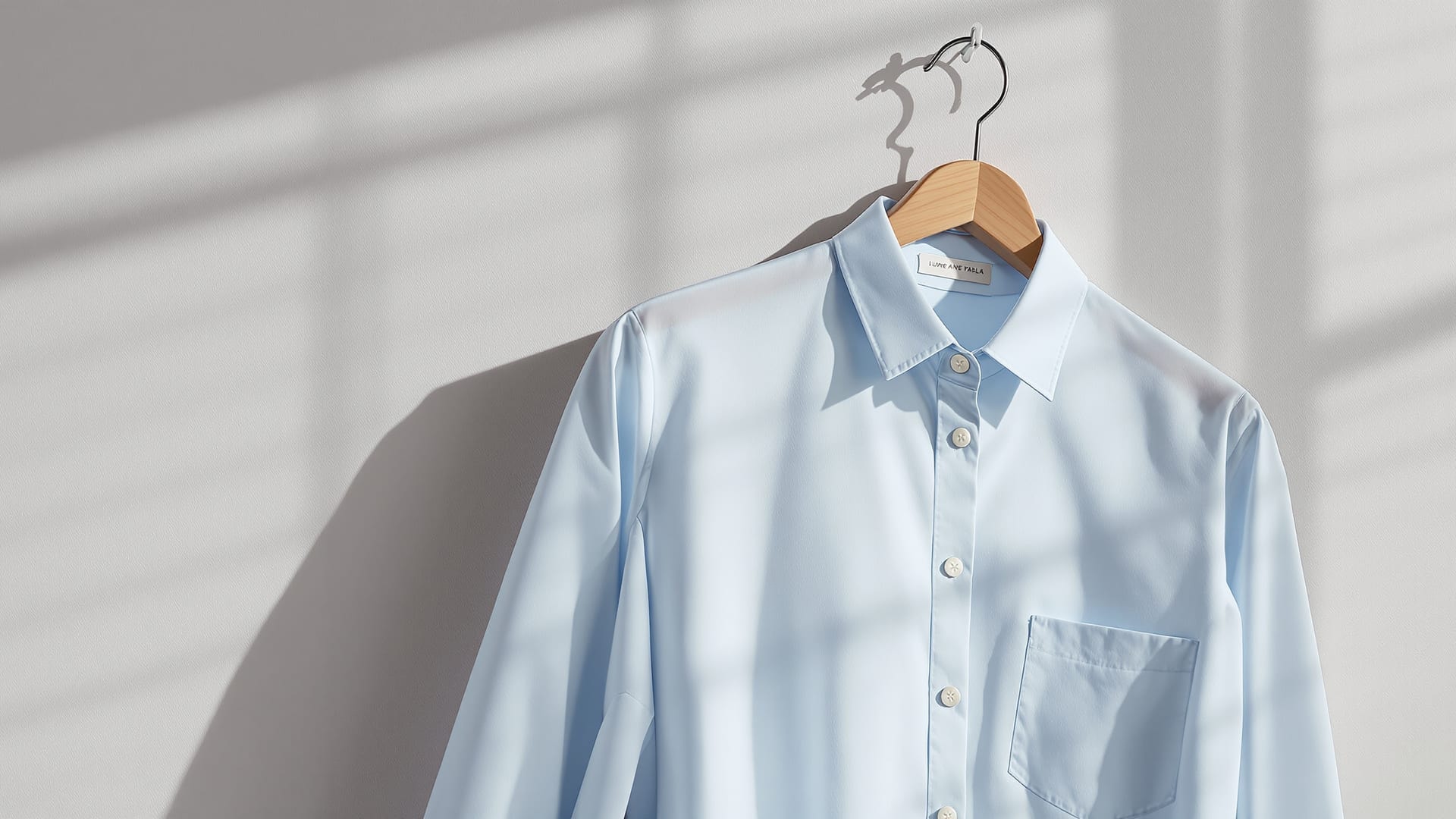
From 2005 the women's range offered several colourways, with a clearance grouping in later years. The house described its output plainly across the whole period as "quality formal cotton dress shirts, ties, cufflinks and socks" for men and women alike, and its positioning line for the women's range was the same one it used everywhere: pure cotton, formal, no compromise on cloth.
The construction vocabulary is shared with the men's ranges and set out in the glossary. Where a women's shirt differs structurally is chiefly in the darts — folds of fabric stitched to a point to shape the body — and in the collar, which is generally cut a touch smaller in proportion to the neckline.
The same cloth
Whatever else changed, the cotton did not. Two-fold yarn, woven from long-staple fibre, in the weaves the house used across everything it made: poplin for the flattest formal ground, oxford and royal oxford for weight and lustre, herringbone and twill for texture, end-on-end for a soft flecked solid. A women's poplin shirt from this house and a men's one were the same fabric cut to different blocks.
Fit, then and now
Women's shirt sizing has never settled the way men's collar sizing has: a men's shirt is sold on a neck measurement that is standardised across the trade, while women's shirts are sold on dress size, bust measurement or a house's own scale, which is why they are harder to buy by post. The British Standards Institution publishes the BS EN 13402 sizing designation series that attempted to bring order to exactly this problem. Anyone whose measurements sat outside a house block was, then as now, better served by a made-to-measure route.
Care
Identical to the men's ranges, because the cloth is identical: wash at 40°C with a light spin, remove any collar stiffeners first, do not tumble dry, and iron while still slightly damp. A shrinkage allowance is built into two-fold cotton production, so judge the fit after a few washes rather than out of the packet. The full instructions are on the product care page.
Related ranges
The men's ranges, accessories — silk ties, cufflinks and cotton socks — and catalogue index cover the house's catalogue. None of it is for sale.